


On November 24th, Beijing time, Samsung Display will hold a QD-OLED shipment ceremony on the 30th. Samsung Display is finally going to mass production points-Organic Light Emitting Diode Display (QD Display). Overcome the concern about the decline in yield, and successfully achieved mass production after more than two years of investment. It laid the foundation for getting rid of the pursuit of Chinese manufacturers and leading the display market. With Samsung's participation, the OLED TV market is expected to grow rapidly. It is a challenge to expand the panel production and increase the yield rate.
According to a Korean media ETNews report, Samsung Display said on November 23 that it will hold a QD Display shipment ceremony on November 30. QD Display will be produced on the 8.5-generation Q1 production line in Asan Park, Chungcheongnam-do, and will be supplied to major customers such as Samsung Electronics and Sony. Previously, there were concerns that considering the low yield rate may delay the mass production time, but as reported by this newspaper before, it will be mass production in November, and the first QD Display panel will be shipped on the 30th. The panels are supplied to the Samsung Electronics TV factory after the module process. It has been more than two years since Samsung Electronics vice chairman Lee Jae-yong visited Samsung Display Asan Park in 2019 and said that 13 trillion won will be invested in QD Display research and development by 2025.
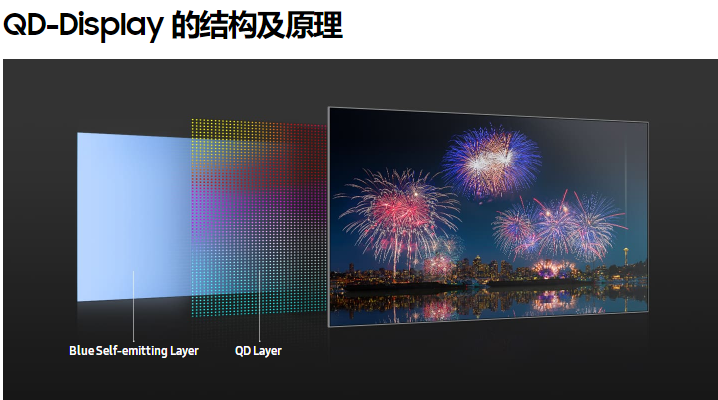
Samsung Display's QD Display panel production capacity is 30,000 per month. On the 8.5-generation production line, each motherboard can produce three 65-inch panels, so 1 million 65-inch TVs can be produced every year. If 55 inches are taken into consideration, an additional 700,000 units can be added. It is reported that Samsung Electronics will exhibit QD OLED TVs using QD Display at CES 2022 in the United States next year. Following smart phones, OLED, which has rapidly penetrated into tablet computers and notebook computers, is also expected to become the general trend in the TV market.
With the mass production of QD Display by Samsung Display, the display competition landscape is expected to change. The monopoly of the large-size OLED market for TVs by LG Display will be broken. In terms of technology, Samsung's QD OLED and LG's WOLED will compete. LG Display, which is fighting alone in the OLED TV market, also welcomes QD Display to join, because the overall OLED market will expand. It will be an important opportunity for the Korean display industry, which is seized by China to occupy the LCD market, to lead the world again.
Low yield is a problem that needs to be overcome. According to Omdia data, the yield rate is below 30 percent . The cost of 65-inch QD Display is US2196 and 70 percent is US725. When the yield rate is 70 percent , the cost difference with LCD TV is only 2.4 times, which will ensure price competitiveness. In addition, the panel production capacity needs to be expanded. At present, QD Display's production capacity is only 1 to 2 percent of the output of Samsung Electronics' TV, which produces 50 million units a year. This is why Samsung Electronics is expected to purchase WOLED panels from LG Display.


